

Is it harder to ride a bike with a fat tire? What are the advantages and disadvantages?
Fat-tire bikes are like the big trucks of cycling, and fat-tire bikes can venture to places other bikes can only dream of.
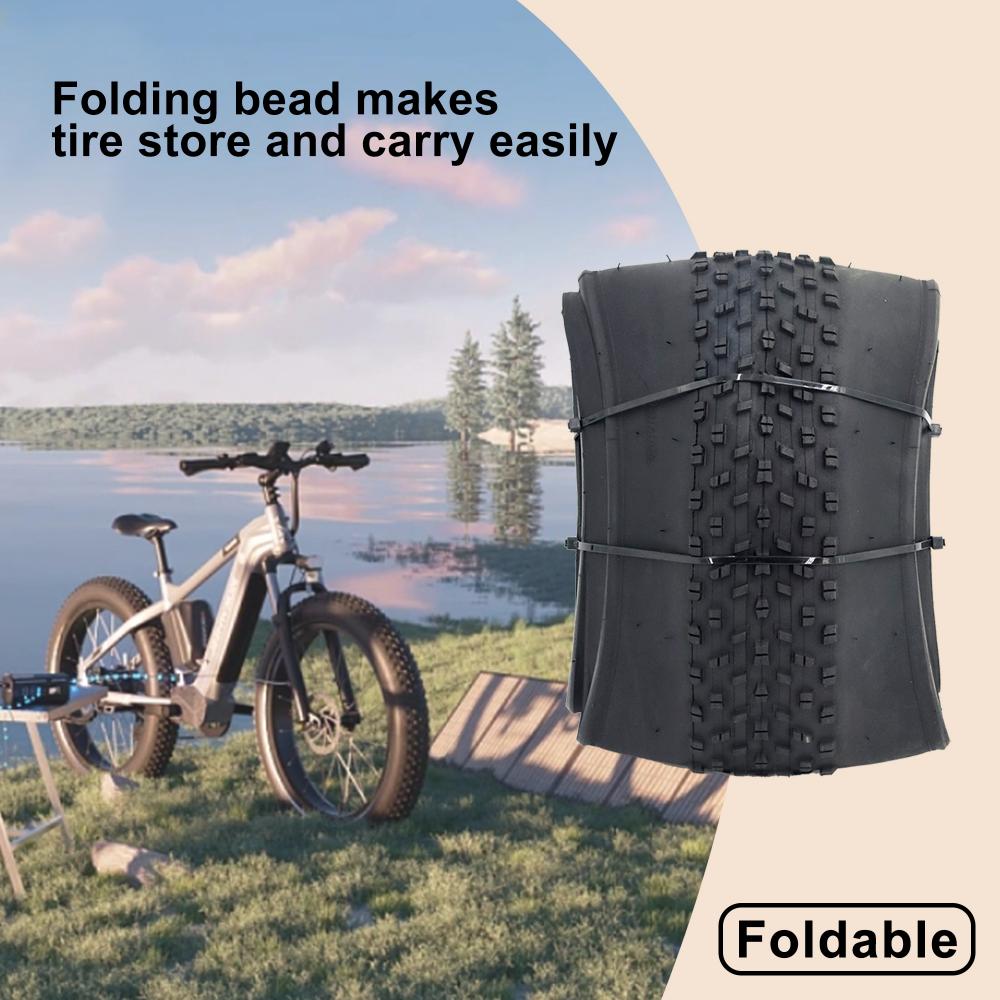
Mountain Bike Fat Bike Folding Bicycle Tire
But what exactly are fat tire bikes, and do they make sense? In this article, we will explain their uses, pros and cons.
In short, a fat bike is a bike that has very wide tires, usually at least 3.8 inches wide.
They come in a variety of shapes and sizes, but are usually made for off-road expeditions.
Fat-tire bikes usually rely on their high-capacity tires to absorb the impact from the ground. However, there are also fat tire bikes with front and rear shock absorbers.
Originally designed for riding on sand and snow, the large contact surface between the tire and the ground allows the fat-tire bike to float on soft terrain where other fine-tire bikes would quickly sink and get stuck.
However, fat-tire bikes aren't limited to beaches, swamps, and winter rides - they offer incredible grip on any terrain.
Due to their high tire capacity, fat bike tires can operate at very low pressures, giving the feeling of a floating ride as the bike absorbs bumps from the road.
Fat tires are also popular among adventure riders and bike enthusiasts, especially when the route involves sand or snow, and fat tires are often designed with mounting points for extra loads.
The most obvious problem is the added weight that comes with huge tires, rims, and oversized parts (more on that later).
When precise riding is required, their wide tires can feel very blurry.
Braking performance on steep roads is also lower compared to other mountain bikes.
Fat-tire bikes have a high spinning weight, which means a lot of braking force is needed to slow down the wheels.
Cost and component selection are also factors worth considering.
Fat tire bikes require specialized parts, such as tires, hubs, and cranks.
These can be more expensive than similar parts for a regular bike and are often harder to come by, which means fewer options when customizing a bike.
A common question is whether big tires make a fat-tire bike harder to pedal than a regular mountain bike.
The answer is not simple, depending on what (relatively) thin-tire mountain bike is used as a reference point.
Fat bikes are usually heavier than non-fat bikes. This makes them harder to step on, especially uphill. The extra spinning weight and increased rolling resistance also make it harder for them to reach speed and limit their acceleration.
Fat-tire bikes are one of the few modern bike types that still use 26-inch wheels.
Some 27.5-inch tires can also be used on fat-tire bikes, however, 26-inch wheel sizes are more common.
To accommodate large tires and provide a huge amount of air, fat-tire bike rims are wider and heavier than most bikes. They range in width from 50 mm to more than 100 mm.
Most of the grip is generated by the large contact surface of the tire, and tread design is not a major problem on fat bicycle tires.
Tires with medium level tread are a good choice because aggressive tread will further exaggerate the creep of fat tires when driving on firm ground.
In general, the heavier the tire, the better the shock absorption - which is important to minimize bounce bounce and improve comfort on rough roads.
Because fat bike tires operate at very low pressures, seemingly small changes can have a big impact on the bike's handling.